
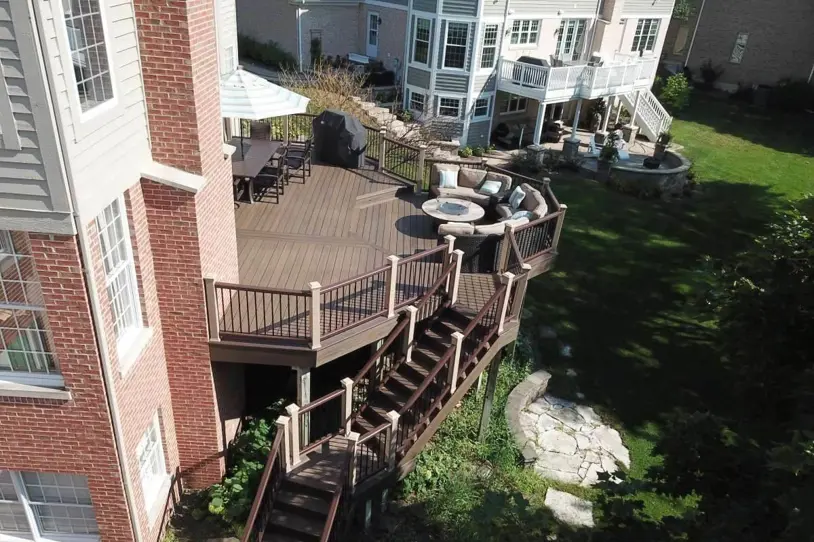
Building a deck is one of the best ways to extend your outdoor living space, but not all decks are built the same. One of the most modern and structurally interesting designs is the cantilever beam deck construction method. It creates a clean, “floating” look while reducing the need for visible support posts.
In this guide, we’ll break down how cantilever decks work, how far they can safely extend, when they may fail, and whether they’re the right choice for your home.
What Is Cantilever Beam Deck Construction?
Cantilever beam deck construction is a method in which part of the deck extends beyond its supporting beam or joist system without additional posts beneath it. Instead of relying on vertical supports at every corner or edge, the deck is balanced using engineered extensions of beams and joists that are anchored back into the main structure.
In simple terms, part of the deck “hangs” outward, supported by the strength and weight distribution of the backspan inside the structure.
How Cantilever Decks Differ From Traditional Post-Supported Decks
Traditional decks rely heavily on vertical posts and beams placed under every section that needs support. These posts transfer weight directly into the ground.
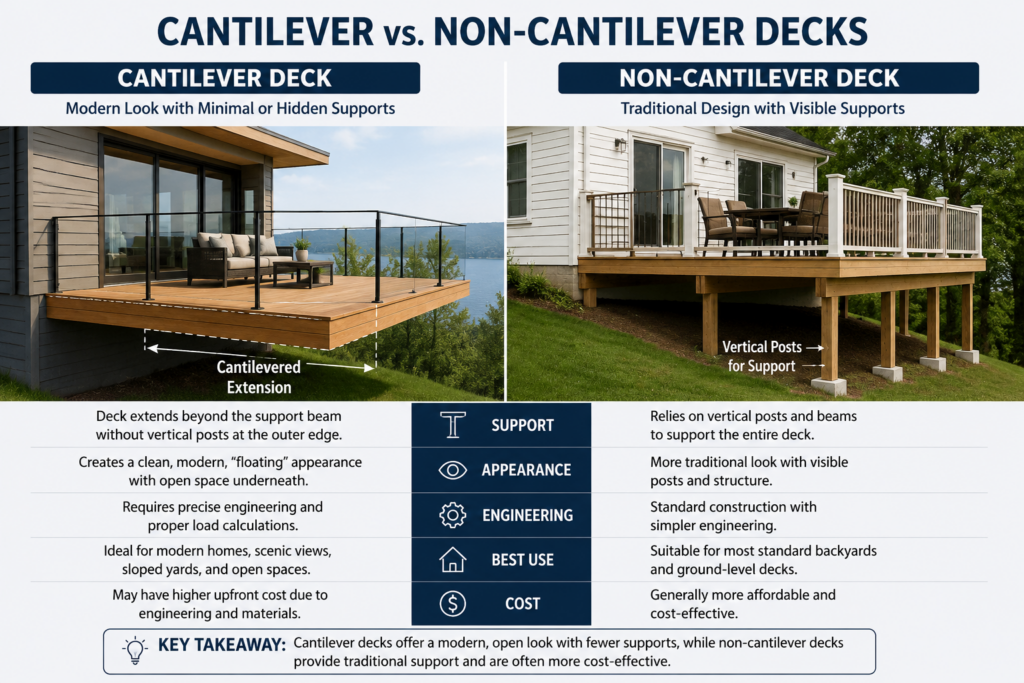
Cantilever decks, on the other hand, reduce the number of visible supports. The load is distributed backward into the structure, allowing the outer section to extend freely. This creates a more open, modern design with fewer obstructions underneath.
The trade-off is that cantilever systems require more precise engineering and proper load calculations. They are not something to “guess” during construction.
Key Components: Beams, Joists, and Backspans
A cantilever system depends on three main structural elements:
- Beams: The main horizontal support carrying the deck load
- Joists: Smaller framing members that run across the beams
- Backspan: The portion of the joist that extends inward and balances the cantilevered section
The relationship between the backspan and the outward extension is what determines how safe and stable the deck will be.
What Does a Cantilevered Deck Look Like?
A cantilevered deck is often recognized by its “floating” appearance. From the outside, it may look like the deck is hovering with minimal or hidden support.
This design is especially popular in modern homes where clean lines and open space are a priority.
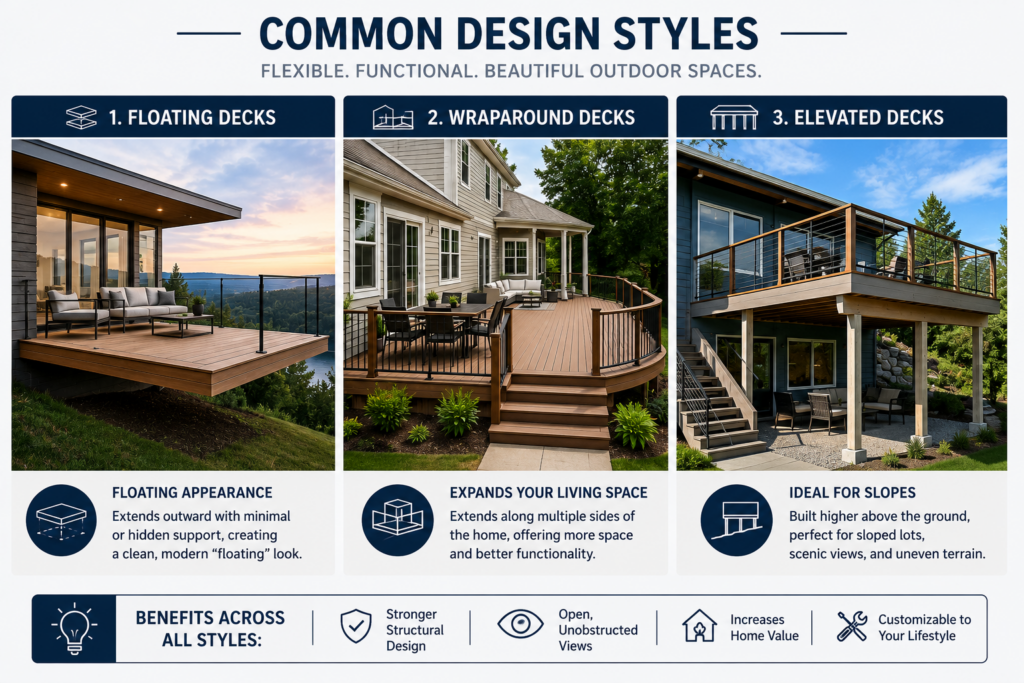
Common Design Styles (Floating Decks, Wraparound Decks, Elevated Decks)
Cantilever construction is commonly used in the following:
Floating-style decks that appear suspended above ground, Wraparound decks extending from multiple sides of a home, and elevated decks built on sloped or uneven yards. Each style benefits from the reduced visual clutter that posts would normally create.
Visual Examples of Cantilever vs. Non-Cantilever Decks
A traditional deck shows clear vertical posts at regular intervals, which can sometimes interrupt outdoor views or usable space beneath the deck.
A cantilever deck removes many of those supports at the outer edge, creating a more open look. The difference is especially noticeable in backyard designs where homeowners want unobstructed space below.
How Far Can a Deck Be Cantilevered?
One of the most common questions in cantilever beam deck construction is how far the deck can safely extend.
There’s no one-size answer, but there is a general rule used in the industry.
The General Rule of Thumb (1/4 to 1/3 of the Backspan)
A safe cantilever typically extends about one-quarter to one-third of the backspan. For example, if the joist extends 12 feet into the structure, the cantilevered portion might safely extend 3 to 4 feet outward.
This ratio helps maintain balance and prevents excessive stress on the outer edge.
Factors That Affect Cantilever Length (Beam Size, Material, Load)
Several conditions influence how far a deck can safely extend:
- Type of wood or engineered material used
- Size and spacing of joists
- Expected load (furniture, people, planters, hot tubs)
- Local climate conditions, such as snow or strong winds
Heavier loads or weaker materials require shorter cantilevers for safety.
IRC Code Requirements and Local Building Regulations
Most regions follow IRC (International Residential Code) guidelines, but local building departments may have stricter rules. Permits are usually required, and inspections ensure the structure meets safety standards.
Skipping this step can lead to serious structural risks and legal issues.
At What Point Will a Cantilever Beam Fail?
Like any structural system, cantilever decks can fail when they are overloaded, poorly built, or poorly maintained.
Signs of Overloading or Structural Stress
Warning signs include:
- Noticeable sagging at the outer edge
- Cracks in beams or joists
- Bouncing or excessive movement when walking
- Loose or shifting connections
These are early indicators that the structure is under too much stress.
Common Construction Mistakes That Lead to Failure
Most failures happen during construction, not after. Some common issues include:
- Incorrect joist spacing
- Overextended cantilevers beyond safe ratios
- Weak or undersized beams
- Poor fastening or hardware use
Even small miscalculations can create long-term safety risks.
Material Degradation: Rot, Rust, and Weather Damage
Over time, moisture, insects, and weather exposure can weaken structural components. Wood rot or rusted connectors reduce load capacity, making the cantilever unsafe even if it was originally built correctly.
Regular inspection is essential for long-term durability.
Are Cantilever Decks Safe?
Yes, cantilever decks are safe when properly designed and built. The key is precision engineering and code compliance.
Why Proper Engineering and Permits Matter
A cantilever system is not a “guess-and-build” project. It requires structural calculations to ensure the weight is properly distributed. Permits and inspections confirm that the design meets safety standards.
Maintenance Tips to Keep Your Cantilever Deck Safe Long-Term
A well-built deck still needs care. Homeowners should regularly check for moisture damage, loose fasteners, and movement in the structure. Keeping the deck clean and sealed also helps extend its life.
Why Hiring a Licensed Contractor (Like Core One) Reduces Risk
Experienced contractors understand load limits, local codes, and proper installation techniques. Working with professionals like Core One Construction helps ensure the deck is both visually appealing and structurally sound from the start
Cost of Building a Cantilever Beam Deck
The cost of cantilever beam deck construction depends on size, materials, and complexity.
Average Cost Breakdown by Material and Size
On average, cantilever decks may cost more than traditional decks due to additional engineering and framing requirements. Hardwood or composite materials also increase pricing.
Factors That Increase or Decrease Pricing
Several elements affect total cost:
- Deck height and size
- Type of material (wood vs composite)
- Design complexity
- Permit and inspection fees
- Site conditions like slope or soil type
A simple design on flat ground will cost significantly less than a multi-level or elevated structure.
Is a Cantilever Deck Right for Your Home?
Cantilever decks are not for every property, but they can be a perfect solution in the right situation.
Pros and Cons to Consider
The biggest advantage is the modern, open design and reduced need for posts. However, they require careful engineering and may cost more upfront compared to standard decks.
Best Use Cases (Sloped Yards, Modern Home Designs, Waterfront Properties)
Cantilever decks work especially well for the following:
- Sloped or uneven yards where posts are difficult to install
- Modern architectural homes
- Properties with scenic views where open space is important